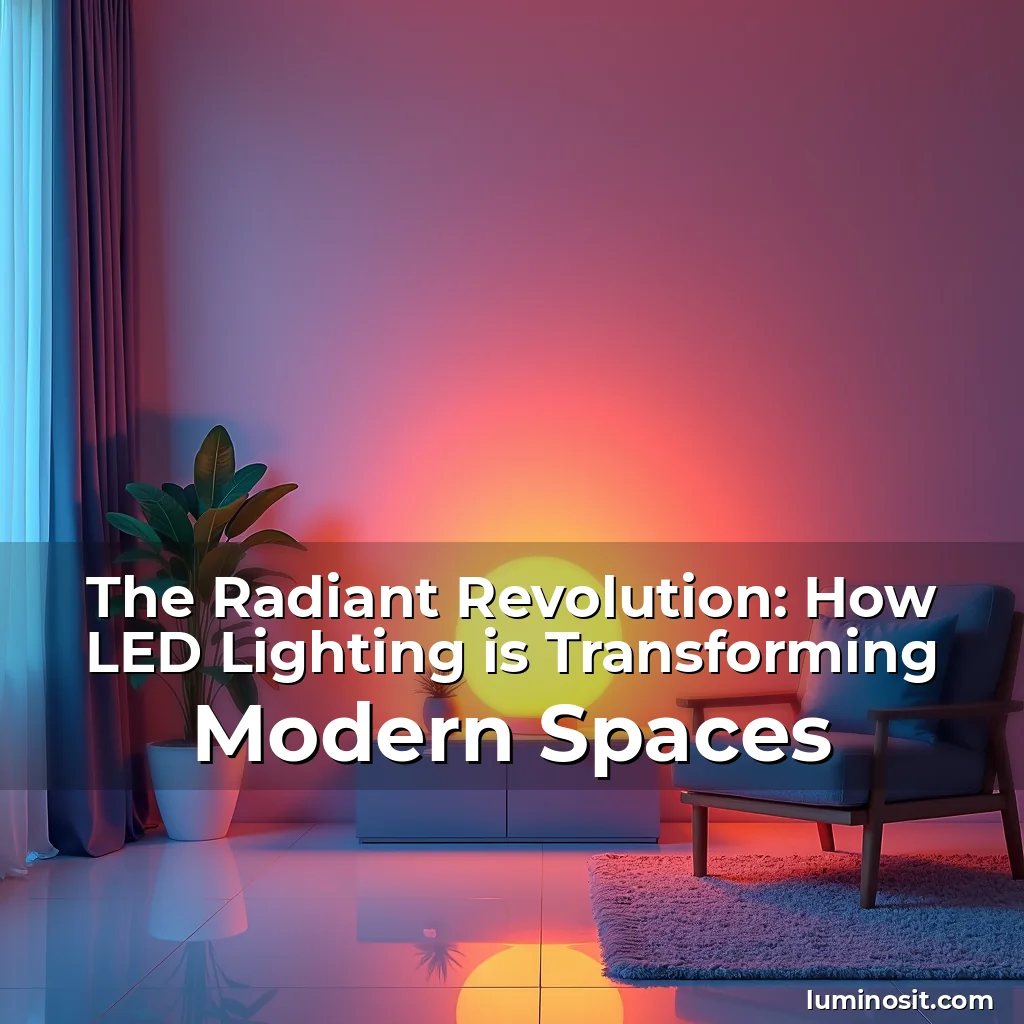
The Radiant Revolution: How LED Lighting is Transforming Modern Spaces
In an era where energy efficiency meets aesthetic brilliance, LED lighting has emerged as a game-changer across homes, businesses, and public spaces. This revolutionary technology not only illuminates our surroundings but also redefines how we interact with light itself.
From reducing electricity bills to enabling smart home integration, LEDs offer solutions that were once unimaginable. Their versatility makes them suitable for everything from ambient room lighting to high-intensity industrial applications.
The Science Behind LED Technology
At the heart of every LED lies semiconductor physics. When electrical current flows through these materials, electrons move to higher energy levels and emit photons upon returning to their original state.
This process differs fundamentally from traditional incandescent bulbs which waste most of their energy as heat. The efficiency gain here is staggering, with LEDs converting up to 80% of consumed power into visible light compared to less than 10% in conventional lamps.
Modern advancements have led to phosphor-coated blue LEDs producing white light efficiently. By combining different wavelengths, manufacturers create balanced color temperatures ranging from warm yellows to cool whites.
- Emission Process: Electrons excited by electric current release photons when they fall back to lower energy states.
- Efficiency Gains: Up to 80% efficiency vs. less than 10% in incandescents due to reduced thermal loss.
- Color Spectrum: Phosphor conversion enables full spectrum white light production from single-color diodes.
Environmental Impact and Sustainability
The environmental benefits of LED adoption are profound. With significantly longer lifespans, these lights reduce electronic waste and minimize resource consumption over time.
According to the US Department of Energy, widespread use of LEDs could save enough electricity to power 26 million households annually by 2035. That represents a massive reduction in carbon emissions and fossil fuel dependence.
A typical LED bulb lasts approximately 25,000 hours – roughly 25 years under normal usage conditions. In contrast, halogen bulbs need replacement every few thousand hours at most.
Lifecycle Analysis
An independent lifecycle assessment showed that LED bulbs produce fewer greenhouse gases during both manufacturing and operation phases. They require less raw material extraction and processing compared to other lighting technologies.
Even considering transportation impacts, LEDs maintain a smaller ecological footprint. Their compact size allows efficient packaging and shipping methods that minimize fuel consumption.
Economic Advantages for Consumers
While initial costs may be higher than traditional alternatives, long-term savings make LEDs an attractive investment. Lower energy consumption translates directly into reduced monthly utility expenses.
A 60W equivalent LED consumes around 8-12 watts while providing similar brightness levels. Over its lifespan, this results in substantial cost savings relative to standard bulbs.
Government incentives further enhance affordability. Many countries offer rebates or tax credits for switching to energy-efficient lighting systems.
Diverse Applications Across Industries
LEDs’ adaptability spans numerous sectors including residential, commercial, automotive, and healthcare environments. Their dimmable features allow precise control over ambiance and functionality needs.
In retail settings, dynamic LED displays can highlight products effectively while maintaining consistent illumination standards. Museums benefit from adjustable color temperature options preserving artwork integrity.
Hospitals utilize specialized surgical LEDs offering sterile, shadow-free illumination crucial for precision procedures. These medical-grade fixtures meet strict safety and performance regulations.
Smart Home Integration
Integration with IoT platforms transforms ordinary LED strips into intelligent lighting ecosystems. Voice-controlled switches enable hands-free adjustments tailored to personal preferences.
Energy management systems track usage patterns automatically, optimizing output based on occupancy sensors and natural daylight availability. Some models even learn user behavior over time.
Security applications include motion-activated outdoor lighting that deters intruders without unnecessary energy expenditure. Smart streetlights adjust brightness according to traffic flow patterns.
Design Flexibility and Aesthetic Appeal
Architectural designers appreciate LEDs’ form factor flexibility. Thin profiles allow seamless installation within walls, ceilings, or furniture components without compromising structural elements.
RGB LED panels provide endless creative possibilities for interior design projects. From subtle accent lighting to vibrant entertainment zones, these systems support various modes and effects.
Lighting can now serve dual purposes – functional illumination combined with mood enhancement capabilities. Dimming ranges often extend beyond standard limits found in older technologies.
Creative Uses in Interior Design
Accent lighting using narrow-beam LED strips highlights architectural details such as crown moldings or built-in shelves. These directional beams create visual interest without overwhelming the space.
Under-cabinet lighting improves kitchen workspaces by eliminating shadows cast by overhead fixtures. Adjustable angles ensure optimal task visibility regardless of surface orientation.
Wall washers evenly distribute light along vertical surfaces, creating uniform illumination that enhances wall textures and finishes. This technique is particularly effective for feature walls.
Maintaining Optimal Performance
To maximize longevity, avoid exposing LEDs to excessive humidity or direct water contact unless specified by manufacturer ratings. Proper ventilation helps dissipate any residual heat generated.
Regular cleaning prevents dust accumulation that might affect light output quality over time. Wipe lenses gently with microfiber cloths rather than abrasive materials.
For outdoor installations, check waterproof classifications before purchasing. IP65-rated fixtures withstand rain exposure whereas IP67 versions can handle brief submersion periods.
Futuristic Innovations on the Horizon
Researchers continue pushing boundaries with organic LEDs (OLEDs) capable of emitting light from flexible sheets instead of rigid chips. These innovations promise new dimensional lighting experiences.
Thermophotovoltaic cells integrated with LEDs could revolutionize energy recovery processes. Waste heat from lighting systems would then generate additional usable electricity.
Bio-luminescent research explores mimicking nature’s own light-producing mechanisms for sustainable urban lighting solutions. While still experimental, early prototypes show promising potential.
Conclusion
As we’ve explored, LED lighting represents much more than just an upgrade to traditional illumination sources. It embodies a paradigm shift towards smarter, greener living environments.
Whether you’re renovating your home, upgrading business operations, or designing futuristic interiors, embracing LED technology opens doors to innovative solutions that combine efficiency with elegance seamlessly.