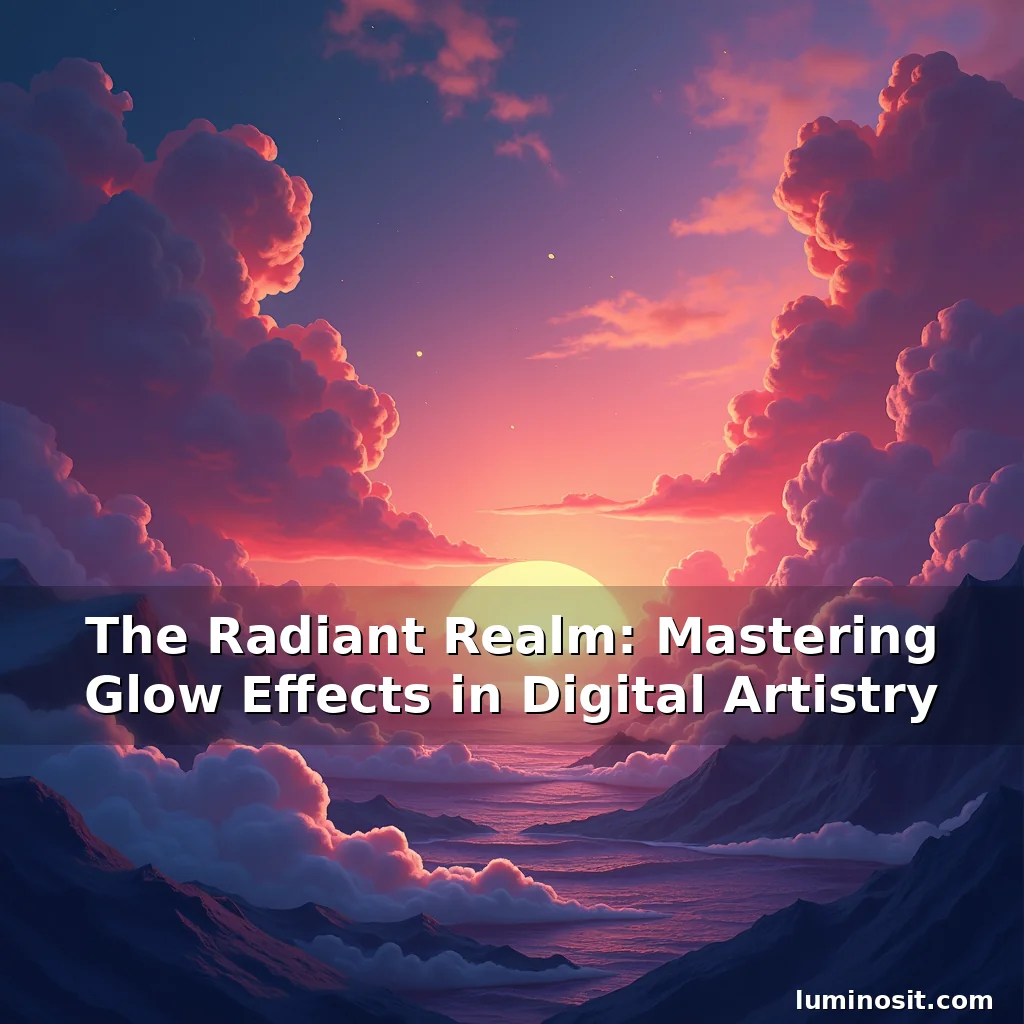
The Radiant Realm: Mastering Glow Effects in Digital Artistry
Glow effects have become an essential element in modern digital art, transforming ordinary visuals into mesmerizing experiences that captivate audiences across various platforms.
Whether you’re designing user interfaces, creating concept art, or enhancing photography, mastering glow effects can elevate your work from good to extraordinary.
The Science Behind the Sparkle
Glow effects are rooted in both physics and visual perception, mimicking natural phenomena such as bioluminescence, neon lighting, and atmospheric haze.
This phenomenon occurs when light scatters through particles in the air or reflects off surfaces, creating a soft radiance around objects.
In digital environments, artists simulate these effects using algorithms that calculate light diffusion based on material properties and environmental factors.
Understanding the underlying principles helps creators achieve more realistic results while maintaining creative control over their designs.
Types of Glows You Should Know
Digital artists employ several types of glows depending on the desired outcome and medium used.
One common type is the radial glow, which expands outward from a central source like a spotlight or glowing object.
Another variation is the linear glow, often seen along edges or outlines where light interacts with different textures.
Additionally, there’s the ambient occlusion glow that enhances depth by simulating how light gets blocked by nearby surfaces.
Exploring Advanced Techniques
Advanced techniques involve combining multiple glow layers to create complex lighting scenarios.
For instance, layering a soft radial glow over a sharp linear glow can produce striking contrasts suitable for dramatic scenes.
Some professionals even integrate real-time rendering engines that dynamically adjust glow intensity based on viewer perspective changes.
These methods require careful calibration but offer unparalleled flexibility in achieving lifelike illumination.
Crafting Effective Glow Designs
A well-designed glow should enhance rather than overpower other elements within a composition.
Balancing brightness levels ensures that highlights don’t wash out surrounding details while still drawing attention effectively.
Using color theory principles allows designers to choose complementary hues that reinforce thematic elements without clashing visually.
Experimentation plays a crucial role here; what works best depends largely on context and personal style preferences.
Tools & Software for Creating Glows
Various software tools provide powerful features specifically tailored towards generating high-quality glow effects.
Adobe Photoshop offers extensive brush options combined with layer blending modes ideal for crafting custom glows manually.
Blender provides advanced node-based systems allowing users to manipulate light sources interactively during scene construction phases.
Unreal Engine excels at real-time applications where dynamic interaction between lights and materials creates immersive environments seamlessly.
Choosing the Right Tool for Your Needs
Selecting appropriate software hinges upon understanding project requirements and technical capabilities available.
If working primarily with static images, photo editing suites might be sufficient whereas game developers would benefit more from engine-specific solutions.
Familiarity with each tool’s interface also influences efficiency since learning curves vary significantly among programs.
Considering future scalability could influence decisions regarding whether open-source alternatives suffice versus investing in premium licenses.
Trends Shaping Modern Glow Effect Design
Current trends reflect growing interest in hyper-realistic simulations achieved through AI-assisted design processes.
Artificial intelligence now assists in predicting optimal glow parameters automatically based on input data analysis.
There’s increasing emphasis placed on sustainability aspects too—using energy-efficient render settings reduces overall carbon footprints associated with production cycles.
Virtual reality integration presents new challenges yet opens exciting opportunities for interactive storytelling via responsive lighting behaviors.
Common Mistakes When Applying Glows
Misjudging contrast ratios frequently leads to unbalanced compositions where key focal points get lost amidst excessive highlight saturation.
Overuse of vibrant colors may distract viewers instead of guiding them toward intended areas of focus within a piece.
Ignoring spatial relationships means failing to account properly how shadows interact with illuminated regions causing unnatural appearances.
Failure to test outputs under varied viewing conditions risks poor visibility issues especially when transitioning formats between screens or print media.
Case Studies: Real World Applications Of Glows
Notable examples include cinematic productions utilizing volumetric fog effects enhanced by subtle background glows adding atmosphere instantly.
In mobile app development, UI components feature micro-glow animations improving usability through intuitive feedback mechanisms.
Educational institutions leverage augmented reality setups incorporating targeted glows highlighting interactive elements during virtual tours.
Architectural visualization benefits greatly from accurate simulation techniques ensuring client presentations accurately represent proposed structures’ aesthetics before actual construction begins.
Future Directions For Glow Technology
Ongoing research explores quantum dot technologies promising breakthroughs in display accuracy enabling true-to-life representations previously thought impossible.
Advancements in haptic technology suggest potential future implementations where tactile sensations accompany visual cues reinforcing multisensory engagement experiences.
Nanotechnology developments may eventually allow surface treatments capable of emitting controlled emissions eliminating need for external light sources altogether.
As computing power increases exponentially alongside algorithmic improvements, expect ever more sophisticated models capable of replicating intricate optical behaviors realistically across diverse mediums.
Conclusion
Glow effects serve as vital components contributing significantly towards creating compelling visual narratives across numerous disciplines today.
By embracing scientific foundations behind illumination phenomena coupled with innovative technological advancements, creators unlock endless possibilities redefining standards continuously evolving landscape contemporary graphic design field resides within currently.