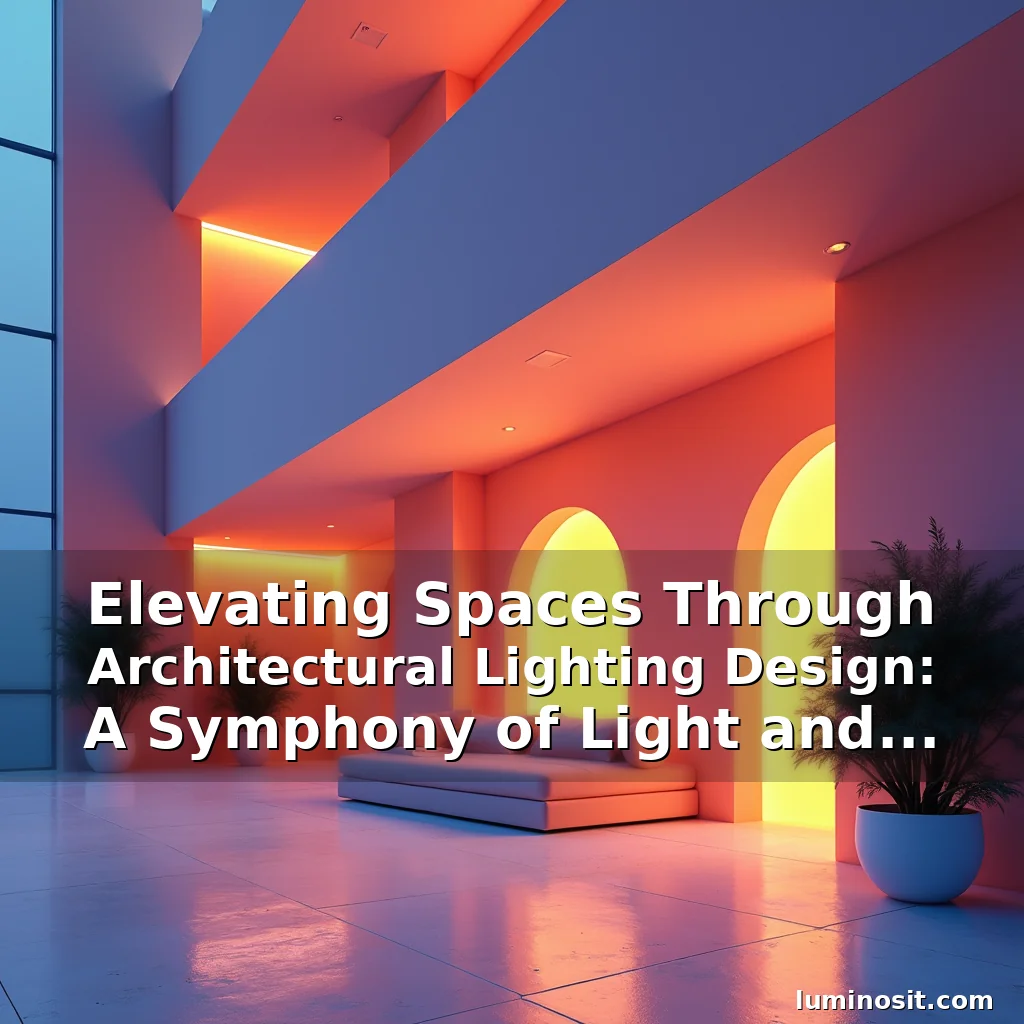
Elevating Spaces Through Architectural Lighting Design: A Symphony of Light and Functionality
Architectural lighting transcends mere illumination—it transforms spaces into dynamic environments where form, function, and emotion converge. From grand public structures to intimate residential interiors, thoughtful lighting design enhances aesthetics, guides behavior, and fosters well-being.
This exploration delves into the intricate world of architectural lighting, examining its evolution, technical nuances, creative applications, and impact on human experience. Whether you’re an architect, designer, or enthusiast, this guide equips you with knowledge to harness light as both art and utility.
The Evolution of Architectural Lighting: History and Modern Innovations
Lighting has shaped civilizations since ancient times, from oil lamps in Mesopotamia to Roman aqueducts channeling sunlight. However, modern architectural lighting emerged during the Industrial Revolution when gaslight transformed urban landscapes and electric bulbs revolutionized interior design.
By the mid-20th century, architects like Le Corbusier and Mies van der Rohe integrated glass facades and minimalist fixtures, emphasizing natural light. Today, innovations such as tunable white LEDs, photovoltaic panels, and AI-driven control systems redefine how we interact with artificial and natural light.
- Historical milestones: Gaslight era (1800s) introduced consistent outdoor illumination; Edison’s incandescent bulb (1879) democratized indoor lighting.
- Modern breakthroughs: OLED panels offer ultra-thin, flexible lighting surfaces, while Li-Fi uses visible light communication for data transmission through LEDs.
Fundamental Principles of Effective Architectural Lighting
A successful lighting scheme balances three core components: ambient lighting for overall brightness, task lighting for focused activities, and accent lighting to highlight architectural features or artwork. This triad creates harmony in any space.
Proper layering prevents harsh shadows and glare. For example, recessed ceiling lights provide ambient illumination, while pendant lights over workspaces serve dual purposes as task lighting and decorative elements.
Color temperature selection is critical. Warm tones (2700K–3000K) create cozy atmospheres ideal for living rooms, whereas cool whites (4000K–6500K) enhance alertness in offices or healthcare facilities.
Circadian rhythm consideration has gained prominence in recent years. Smart systems now mimic sunrise/sunset patterns to support healthy sleep-wake cycles, particularly beneficial in hospitals and schools.
Types of Architectural Lighting Systems and Their Applications
General lighting forms the base layer, typically achieved through overhead fixtures or cove lighting. It ensures even distribution of light throughout a room without drawing attention to individual sources.
Task lighting targets specific areas requiring high visibility—think desk lamps in libraries or track lighting above kitchen countertops. These systems often feature adjustable angles for optimal functionality.
Accent lighting directs focus onto particular objects or walls. Wall sconces highlighting textured finishes or directional spotlights illuminating sculptures achieve dramatic visual effects.
Mood lighting, though less utilitarian, plays vital psychological roles. Dimmable systems allow transitions from bright daytime settings to soft evening ambiances, enhancing spatial flexibility.
Integrating Natural Light: Daylighting Strategies and Benefits
Natural light reduces electricity costs, improves mood, and boosts productivity. Strategic placement of windows, skylights, and light shelves maximizes solar gain while minimizing heat transfer.
Glass curtainwalls combined with automated shading systems balance daylight harvesting with thermal comfort. In commercial buildings, this approach can cut lighting energy use by 40% annually.
Interior reflective materials amplify available daylight. Light-colored paints, polished metals, and mirrored surfaces bounce photons deeper into occupied zones, reducing reliance on artificial supplements.
Dynamic glazing technologies enable windows to adjust transparency automatically based on external conditions. Electrochromic glass changes tint at the touch of a button, optimizing both illumination and insulation.
Innovative Technologies Reshaping Architectural Lighting
Smart lighting ecosystems connect fixtures to mobile apps and voice assistants, allowing remote control of color, intensity, and scheduling. Scenes programmed for different times of day or events simplify complex management tasks.
Solar-powered exterior lighting combines renewable energy with aesthetic appeal. Pathway lanterns featuring built-in batteries eliminate wiring complexities while providing sustainable nighttime guidance.
Holographic projectors now cast interactive displays onto building façades, merging entertainment with architecture. These installations create immersive experiences that evolve throughout the year.
Biofeedback sensors analyze occupants’ physiological states to adjust lighting dynamically. Studies show such responsive systems reduce stress levels by up to 25% in office environments.
Design Considerations for Residential vs Commercial Spaces
Residential projects prioritize personalization and comfort. Task lighting in kitchens benefits from under-cabinet strips, while reading nooks require precise spotlighting to avoid eye strain.
Commercial designs emphasize uniformity and safety standards. Retail stores utilize display lighting to showcase products effectively, balancing merchandising goals with ADA compliance regulations.
Healthcare facilities implement specialized lighting protocols. Operating rooms demand sterile, shadow-free illumination, while patient rooms benefit from circadian-aligned schedules promoting restful sleep.
Educational institutions apply lighting psychology to optimize learning outcomes. Schools with dynamic lighting systems report improved student performance and reduced absenteeism rates.
Sustainability and Energy Efficiency in Lighting Design
LED technology leads the charge in energy conservation, consuming 75% less power than traditional bulbs while lasting 25 times longer. Widespread adoption could save global consumers $250 billion annually in electricity bills.
Building codes increasingly mandate minimum efficacy ratings for new constructions. California’s Title 24 standard requires all new lighting to meet 40 lumens per watt efficiency benchmarks by 2025.
Demand-response systems link lighting networks to grid fluctuations. During peak hours, intelligent controllers dim noncritical loads automatically, preventing blackouts and lowering operational costs.
Lifecycle assessments reveal that despite higher upfront costs, energy-efficient solutions pay off within 3–5 years through cumulative savings. Retrofitting existing infrastructure yields substantial carbon footprint reductions.
Case Studies: Iconic Examples of Masterful Lighting Design
Tadao Ando’s Church of the Light employs minimalistic concrete walls punctuated by a single shaft of natural light, creating profound spiritual resonance through controlled illumination.
The Louvre Pyramid in Paris uses glass-clad structures to filter daylight while maintaining visibility of historical artifacts inside. Its geometric precision exemplifies how light can define architectural identity.
Apple Park’s ring-shaped headquarters integrates massive glass panels with internal light wells, achieving a seamless blend of nature-inspired lighting and cutting-edge engineering.
Panama City’s Biomuseo utilizes undulating rooflines that diffuse sunlight through translucent membranes, casting ever-changing patterns beneath the museum’s educational exhibits.
Challenges in Implementing Advanced Lighting Solutions
High initial investment remains a barrier for many clients seeking state-of-the-art systems. While long-term savings justify expenses, convincing stakeholders requires demonstrating ROI through energy audits and occupant satisfaction surveys.
Integration complexity arises when connecting legacy infrastructure to smart platforms. Retrofitting older buildings demands careful evaluation of electrical capacity, conduit pathways, and compatibility with emerging standards.
Maintenance accessibility becomes critical for high ceilings or hard-to-reach locations. Specifying modular fixtures allows easier replacement without disrupting surrounding finishes or structural integrity.
Code compliance adds layers of documentation and testing. Fire-rated enclosures, emergency egress protocols, and radiation shielding requirements vary significantly across jurisdictions.
The Future of Architectural Lighting: Emerging Trends and Possibilities
Biomimetic designs draw inspiration from nature’s optical strategies. Researchers develop self-healing light-emitting coatings modeled after bioluminescent organisms that regenerate damaged surface layers autonomously.
Neuroaesthetic lighting adapts to users’ emotional states via brainwave monitoring devices. Early prototypes detect anxiety indicators through EEG sensors and shift hues toward calming blue-violet spectrums accordingly.
Quantum dot technology enables hyper-precise color tuning, allowing designers to replicate rare wavelengths found in gemstones or deep-sea creatures for unparalleled visual storytelling opportunities.
Metaverse integration opens new frontiers for virtual architectural lighting. Digital twins equipped with realistic illumination models facilitate immersive pre-construction walkthroughs that respond to user interactions in real time.
Conclusion
From ancient torches to quantum dots, architectural lighting continues evolving as both science and art. Understanding its multifaceted role empowers professionals to craft spaces that inspire, inform, and endure across generations.
To elevate your next project, embrace innovation while respecting fundamentals. Prioritize holistic approaches combining technical expertise with creative vision to illuminate not just spaces, but possibilities themselves.